Thursday, 19 September 2019

PHOTO JOURNALISM


                    PHOTOS CAN SPEAK LIKE US

                                             SOME RANDOM STORIES

NEW DELHI, 19 SEP'19                                                                    BY:- PALLAVI GUPTA


1.  

RESPONSIBILITIES AND SITUATIONS ARE SOMETHING WHICH FORCE PEOPLE TO DO WHICH THEY DON’T WANT TO. FAMILY BURDENS AND DREAMS CAN’T BE MANAGED AT SAME TIME. THEY MAKE SACRIFICE FOR FAMILIES. STRUGGLE IS A PART OF LIFE.
BUT AT LAST DON’T LET YOUR DREAMS GO.
DON’T GIVE UP!!!


2. 

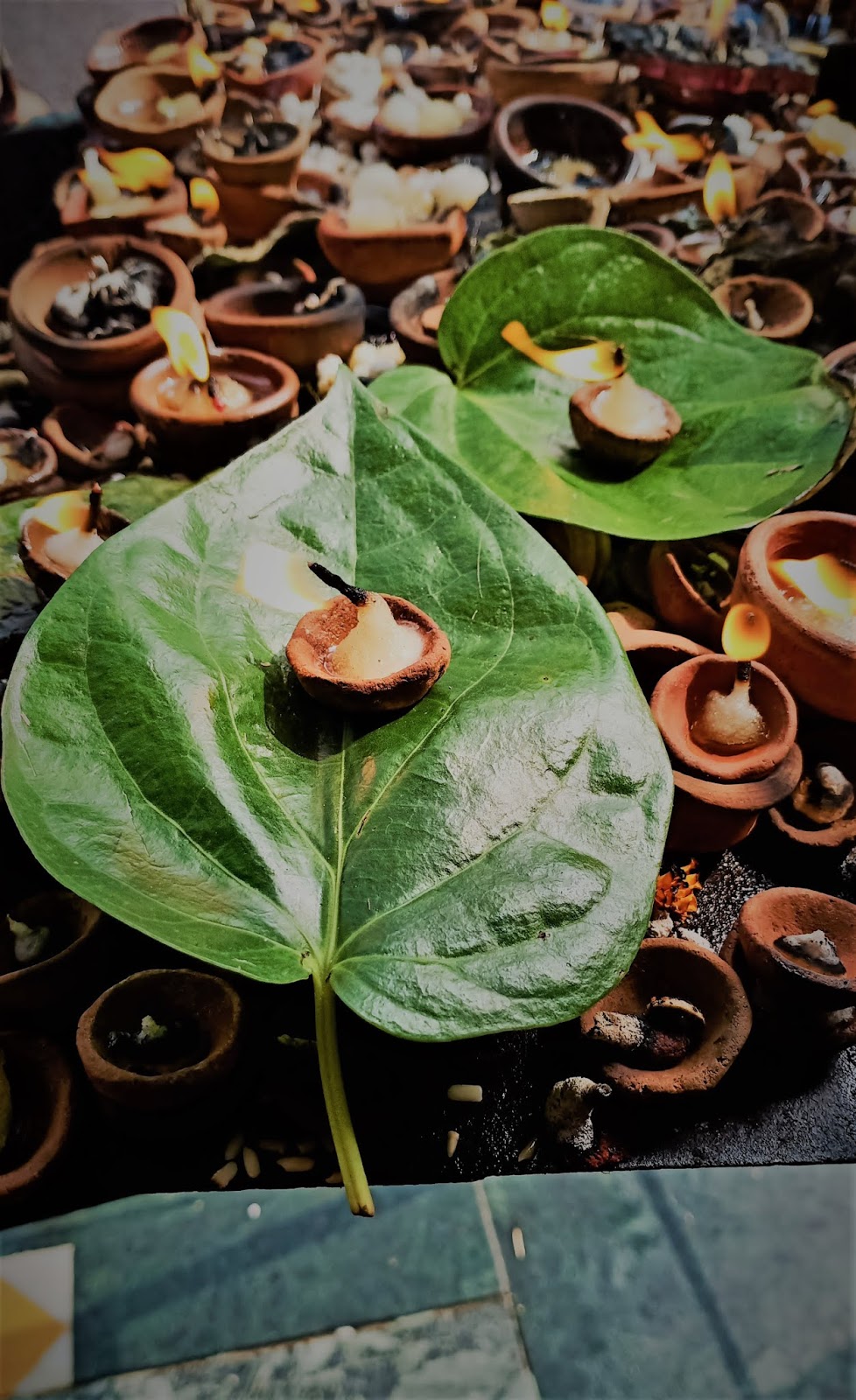
ACCORDING TO PEOPLE, HE HELPS YOU TO SEND YOUR PRAYERS TO GOD.
 IS IT REALITY? OR A BUSINESS..!?
SAINTS ARE REAL OR NOT?
THERE ARE SO MANY QUESTIONS BUT THERE IS NOBODY TO ANSWER.
IS THERE ANYONE..??

3. 

POVERTY DESCRIBES ITS MEANING ITSELF. BUT BEEN HAPPY IN EVERY SITUATION IS WHAT WE CALL STRONG. THESE BEAUTIFUL SMILES ARE TELLING SO MANY THINGS ABOUT THEIR LIFE. THEY HAVE RESPONSIBILITIES.  THEY LOVE EACH OTHER. THEY KNOW HOW TO BE HAPPY WITH NOTHING. THEY HAVE SO MANY IMPORTANT LESSONS OF LIFE TO GIVE AFTER HAVING NOTHING. 
THEY ARE REAL HEROES. 

4. 

HINDU RELIGION IS INCOMPLETE WITHOUT THESE PRACTICES. HINDUS BELIEVE IN THESE BELIEFS BUT THIS IS AN EXAMPLE OF HYPOCRISY IN REAL.  


5. 

 PISSED OFF REACTIONS OF DISGUISED VENDOR. NOBODY IS BUYING GOODS FROM HIM. HIS ANXIETY IS CLEARLY VISIBLE ON HIS FACE. EVERY PERSON OF THIS SOCIETY IS FACING THE SAME PROBLEM. MANY PEOPLE WANT TO WORK AND EARN BUT UNABLE TO DO SAME. 
IS IT THE FAULT OF GOVERNMENT OR GOVERNMENT POLICIES??


THANK YOU FOR YOUR PRECIOUS TIME!!!
HAVE A NICE DAY AHEAD.. :)


Wednesday, 30 January 2019

We can all do BETTER

We can all do better!

We all know that we aren’t the best versions of ourselves. But how do we know that? Most of us believe that comparison is a bad thing, but then how do we know that we can do better?
Or maybe we are the best we can be, but wouldn’t that be being over-confident?  Or maybe then being over-confident might be a good thing? At least you’ll have this eternal insanely optimistic feeling.  The thing is whatever we do, we have to be happy about it. We have to make a picture and watch ourself fit into it.
 Now, once my mom made me go to this wedding in which my cousins were coming, and then they had this function, where all of them performed something or the other, and I was sitting there, searching for things that I could’ve done, and pointing out faults In them, and I always had this feeling coming from inside of me that, if I had learnt this, I could’ve done way better. I wasn’t there criticizing them, I genuinely appreciated that they did what they did but when we came back , I decided to do something with my life, something other than what I was already doing.
This didn’t actually happen though, but what I wanted y’all to notice is that,
‘ When we meet an acquaintance of ours doing better that what we’re doing, we wish to incorporate that thing is our lives, seeing others doing better than us is a force that drives us insanely.’
So doesn’t it actually mean that comparison is good? Maybe it is. But then we also see the comparison people do, between you and the legendary ‘Sharma ji’s son?’ Is that good too?  Well I don’t think so. So wouldn’t it be write to say that only self-comparison is good? That sounds almost right.
When we feel that we can do better, miracles happen.  An acquaintance of mine once quoted,
“ if I ain’t contended with myself,
How do I live a life of satisfaction?
If I don’t look at the achievements of others,
How do I improve myself?
How do I compete with the world?
If the world, it-self teaches me not to compare.
How do I know that I ain’t the best version of my-self
If I don’t compare ?”
So, do you want to stay happy but small or do you want to grow? Obviously most of us love just exactly how we are. 
“That’s the thing, when we love something (be it us, or any work that we’ve done) , we get too blind to whatever is wrong with it.”
Life is too short for staying right where we are, but the saying this also contradicts another theory that others believe, which is about being satisfied with what we have.  Maybe ‘greed is good too.’  I don’t see anything wrong in knowing that we aren’t enough. We just have to be open to accepting changes.
So, get a life for yourself, where the hustle never ends. 

Wednesday, 9 January 2019

Webjournalism and its visit

Web journalism and its visit

I Susmita got the opportunity to express my view on this course,
I remember the first day, at 4th of September 2018 where Arjun Sir was taking our class and the main question which was asked by him was what is the aim to choose this course. I chose this course of web journalism by expecting that to learn about the basic steps of journalism or how to put your thoughts in front of people in a right manner. This course taught me more than that. It furnishes the blogging, journalistic writing, etc.

During this period , I've met such amazing personalities like Shri Padmashree Ravi Chaturvedi, col. Ranveer Singh Jhangwal, Kulvinder Singh Kaur, etc.

This course also gave us the oppurtunities to visit  such renown summits like FICCI, PRESS CLUB OF INDIA, etc where we met many athletes and many more important persons of sports federation.
Dr. Smita Mishra ma'am apart from this took us to Chandni chowk ,so that we could know how to cover such local things of our surroundings and to make people realise its importance.

Therefore this provides an overview of sports economics and marketing. It helps us to introduce information technology to students and its applicants for media.

Tuesday, 25 December 2018

sportsman by heart & a politician by choice:Kirti Azad


Sportsman by heart & a politician by choice: KIRTI AZAD


 Honourable member of parliament and former Indian Cricketer Mr. Kirti Azad attended a sports session on “sports as a catalyst to build a New India” at FICCI‘s 91st Annual General Meeting on 15 of December 2018.

On that session when one of the panelist asked him “how u see sports then and what do you see happening now in terms of your on individual space”?

While answering this question Mr. Kirti Azad firstly said that, “I am a sportsman by heart and a politician by choice”.

He expressed his feelings for sports and said that he loves to be a sportsperson and there is no discrimination in sports. A Sportsman doesn’t belong to any caste, creed, religion, region, etc. The thing which matters for a sportsman is that he/she belongs to his/her team and country as well.

He also talk about the considerations that are followed to be a politician that which caste, area he/she belongs to, which area can fit in where you can contest election.

He also told that “I wish there a sportsman spirit in politics. We would have been a better country.” He also added that he didn’t mean to say that we are a better country but it’s something how we feel within ourselves.

Then he came back to the question that what’s the difference in games then and now, he answered the game is exactly same. Only a few changes might have took place. It’s the attitude which is changed over the year. Lot of money has came into game like BPL, IPL, etc.

He discussed about one of the major problems of sports i,e. the federation. He told that mostly all the posts of the federation are handled by politician which is big problem according to him. Giving by his own example he explained how a full time politician can give his 365 days to a sports federation.

At last he concluded that we can’t depend on federation and government only for helping the sportsman financially, Private Enterprenuers have to give their own contribution for sports.


Monday, 24 December 2018

Gladiators :- People Of Past

A Roman gladiator was an ancient professional fighter who specialised with a particular weapons and armour. They fought before the public in organised games held in large -purpose built arenas throughout the Roman Empire from 105 BCE to 404 BCE. As the fights were usually to death, gladiators had a short life expectancy and so ,although it was a in some respect some glamourous profession, the majority of fighters were prisoners or slaves, still these were the most watched form of sports in the roman world. Roman gladiators were an opportunity for emperors and rich aristrocrats to display their wealth to the populace , to commemorate military victories, mark visits  from important officials, celebrate birthdays or simply to distract the populace from the social and economic problems of the empire. The appeal to the public of the games was as bloody entertainment and the fascination which came from contests which were literally a matter of life and death. Hugely popular events were held in in massive arenas throughout the empire and thousand of people came to attend the events to be entertained by the glory spectacles where wild and exotic animals were hunted ,prisoners were executed ,religious martyrs were thrown to the lions and the stars of the shows  were the symbols of honour and courage.
This sport was very much successful in Roman Empire because it was a form of bloodsport and that was the driving force for the spectators, moreover in Rome executions and ritual killings were a way of keeping the peace and showing the roman who was the boss. The arena was also used to entertain the  lower class citizens of Rome. For those being executed it was a total humiliation as one will feel horrible because he was dying for the entertainment of others. Not all the gladiators that were bought were slave some were thrilled by battle, the roar of the crowd and in hope of winning money  people signed contract with these gladiators school. Many joined these schools in order to boast their class in society i.e. some belonged to upper caste while the others to lower 
The rise of Christianity made these games culturally unacceptable because of the money betting and partnership involved
The gladiators sport existed till  5th century AD, philosopher  Seneca  once wrote “The combats have no protective covering and their bodies are exposed to the blows. This is what people prefer in the regular contest ….And it is obvious why. There is no helmet, no helmet ,no shield to repel the blade. Why have armour? Why bother with skill? All that   just delays death “.


Thursday, 20 December 2018

About Uvayu..

Uvayu tells stories no one else is willing to tell. What makes us different is quite simply our FOMO (for the uninitiated non-millennial, that’s our news-hungry fear of missing out). Millennials are defined by a hunger to know and have it all, and that's what Uvayu strives to appease through its unbiased looking glass. In the process, it constantly questions status quo, sparking relevant conversations along the way.
Our team is a collective of newshounds, maverick story tellers, editors, producers, designers, analysts and reporters who have cut their teeth on the best news teams in the country. We make sense of the systematic chaos that is the world today and seek to bring you the story, however you want it – on your phone through videos, op-eds, infographics, animations and documentaries.

Got an Idea?

We want to take news out of the newsroom. Help us Unscrew the World. Seen or heard something that you think makes for a good story? We'd love to tell it. You can pitch your story ideas, photos and submissions at editor@theuvayu.com. Someone in our team, particularly versed in that subject, will get back to you pronto!
Our brand solutions team is a group of creative directors, copywriters, designers, digital dudes, product nerds and video junkies who will make the right kind of noise for your business. Partner with us to get the clearer, bigger picture, and start new digital trends.
We have a range of roles at Yuvayu, from English and Hindi journalists, camerapersons and VT editors, to creative whisperers, crappy copy killers, design romancers, social mediaholics, product evangelists, and video producers. Things are a lot more normal on the business side of things, and we have roles in sales and marketing, brand solutions, analytics, alliances and ad ops. If there are multiple things you can do, then roses are red, violets are blue, we love you. Bong applicants may please note that since everybody doesn’t understand Bengali, Hindi is the preferred mode of communication at Uvayu. 
We are all passionate about what we do, and we are all passionate about the Net and all that it has to offer. Which includes you.
Oh, almost forgot — we have some very cool Macs. And eats. And air-conditioning and high-speed internet without firewalls ;-)
If you get how we roll and want to hop on for a ride, drop us a line at jobs@theuvayu.com

All You Need to Know about Web Journalism ( UVAYU )


Web Journalism: A New Form of Citizenship provides a much-needed analytical account of the implications of interactive participation in the construction of media content. Although web journalism is a fast-changing technology this book will have sustained appeal to an international readership by seeking to critically assess Internet news production.


With the rise of blogging and citizen journalism, it is a commonplace to observe that interactive participatory media are transforming the relationship between the traditional professional media and their audience. A current, popular, assumption is that the traditional flow of information from media to citizen is being reformed into a democratic dialogue between members of a community. The editors and contributors analyse and debate this assumption through international case studies that include the United Kingdom and United States.

While the text has been written and designed for undergraduate and postgraduate use, Web Journalism: A New Form of Citizenship? will be of use and of interest to all those engaged in the debate over Web reporting and citizen journalism.


Get a journalism degree
All students aspiring to build a career in the field of digital journalism can start by attaining a degree in traditional journalism followed by a specialised course in online/ multimedia journalism. While a course in traditional journalism can provide with all the techniques needed to thrive in the profession, a specialisation in online journalism can hone students’ digital research skills. Furthermore, a digital journalism course can also help students in learning different online technical skills needed for presenting news online. For instance, creating a complete journalism website or gaining knowledge of SEO (Search Engine Optimization) and page ranks.

Build an online portfolio
Having a portfolio in digital mode can help students highlight the best of their work in terms of writing and editing skills as well as expertise in online media. For the same, students can start creating their own blogs. A blog can cover any topic that a student likes as long as it is interesting and well-written.

Opt for internship or freelancing
For students looking forward to a career in online journalism, freelance work can be a good way to refine their writing skills. Apart from that, students can also opt for an internship with an online media organisation to gain expertise. An internship also helps students in showing relevant work experience at the time of a job interview.
Prepare for job interview
Students must note that competition for online journalism jobs in India is increasing with every passing day. Therefore, it is important to go well-prepared for an interview. For the same, candidates are recommended to research thoroughly about the company and its website.

Also, students should note that in a job interview for online journalism profile, candidates are usually tested on their communication (verbal as well as written), interviewing, digital, analytical, and editing skills. Therefore, it is important for candidates to hone their skills effectively.

Ethics of Online Journalists ( UVAYU )

As a communication major, you've many career options including journalism, 
broadcasting, writing, advertising, public relations, and more. However, the 
market is rapidly changing, and more and more communications students 
are moving toward careers in online journalism. All journalists are expected
to follow a strict code of ethics, and given the speed of online journalism, 
it is equally or more important to be without reproach. Here is what you need 
to know in the digital reporting world.

1. How to Tell a Good Source From a Poor Source

Image via Flickr
As an online journalist, you will do most of your research on the Internet. This can be
 frustrating, because websites are often unreliable. Always investigate the source to
 maintain sound research ethics. The following tips will help you find reliable sources:
  • Generally, reputable news sites can be trusted to provide accurate information.
  • Stay away from Internet sources that do not cite the author’s name.
  • Always check the author’s credentials.
  • When information is linked to an organization, verify that the organization is reliable and does not have an agenda.
  • Check for statistics and data to back up the source’s claims.
  • Government sites are full of accurate statistics.
  • Look for articles that cite their sources.

2. How to Find a Good Image if You Don’t Have Your Own

Photos can enhance online content and are a necessity for online journalists; however, 
not all journalists double as photographers, nor do they always have media at the ready
 for the content they are writing. So how do you find good online images without breaking 
copyright laws? The following information will help you with your search:
  • Use public domain images, paying close attention to attribution requirements.
  • If you find a photo you like, ask the owner if you can have permission to reuse it.
  • Check photo-sharing sites that offer Creative Commons search and appropriate attribution.

3. How to be Transparent Online

Being transparent as a journalist is important, but being transparent as an online journalist 
is necessary. A transparent online journalist is one that demonstrates openness and 
accountability. The following practices can help facilitate this:
  • If you make a correction to an article that is already published, note the correction on the updated version.
  • When you are connected personally to a story, share that information in the interest of full disclosure.
  • Maintain open communication with your audience.

4. How to Demonstrate Credibility

Many online writers have taken advantage of the ability to hide behind their computers, 
reporting information that is inaccurate or supports their own biases and agendas. 
Because of this, online journalists are constantly under scrutiny. Credibility is earned 
over time, but you’ll achieve it faster by following these tips:
  • Check your facts and use documentation to support them.
  • Don’t insert personal opinions.
  • Supply supporting links to reliable sources.
In their Code of Ethics, the Society of Professional Journalists states,
 “Journalists should be honest, fair and courageous in gathering, reporting and interpreting
 information.” By following this Code, you will uphold the standards of excellent online
 journalism, and enhance your own professional reputation.

The Era of Web Journalism ( UVAYU )

With the decline of newspapers there's been a lot of talk about web journalism being the future of the news business. But what exactly do we mean by web journalism?
Newspaper Websites
Independent News Websites
Hyper-Local News Sites
Citizen Journalism Sites
Web journalism actually encompasses a whole range of different kinds of sites, including:
Websites run by newspapers are basically extensions of the papers themselves. As such they can provide a wide range of articles in a variety of areas - news, sports, business, the arts, etc. - written by their staff of professional reporters.
In some cases, newspapers shut down their printing presses but continue to operate their websites. Often, however, when the presses stop running the news staff is gutted, leaving only a bare-bones newsroom behind.
These sites, often found in larger cities, tend to specialize in hard-news coverage of municipal government, city agencies, law enforcement and schools. Some of them are known for their hard-hitting investigative reporting. Their content is typically produced by small staffs of full-time reporters and freelancers.
Many of these independent news sites are nonprofits funded by a mix of ad revenue and contributions from donors and foundations.
These sites specialize in coverage of small, specific communities, right down to the individual neighborhood. As the name implies, the coverage tends to focus on extremely localized events: the police blotter, the agenda of the town board meeting, the performance of a school play.
Hyper-local sites can be independent or run by newspapers as extensions of their websites. Their content is typically produced by local freelance writers and bloggers.

Citizen journalism sites run a wide gamut. Some are basically just online platforms where people can post video reports or pictures on virtually any subject. Others focus on a specific geographic area and provide more targeted, specific coverage.
Content for citizen journalism sites is usually provided by a loose affiliation of writers, bloggers and video reporters with varying degrees of journalism experience. Some citizen journalism sites are edited; others are not.

Mobile - First Journalism ( UVAYU )

As 2018 comes to an end, in an extract from the introduction to Mobile-First Journalism. I look at how the past few years have shaped the current face of mobile and social-native journalism — and what that means for its future.
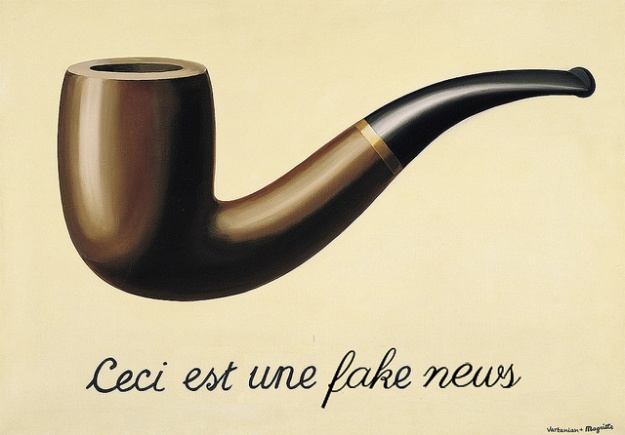
The mood around mobile and social changed dramatically in 2018. To those working in the field, it could sometimes feel like being caught in the crossfire of a battle. Fake news, Russian trolls, concerns over filter bubbles and hoaxes, censorship, algorithms and profit warnings have all shown that the path to mobile-first publishing is going to be anything but an easy one.
Like any new territory, the mobile landscape is being fought over fiercely. But take a step back from the crossfire and you will see that different actors are fighting over different things, in different ways: and there isn’t just one battle — but three.

Journalism’s commercial battle

The commercial battle first erupted in 2013 when audience figures on news websites began to show some unusual changes: mobile visitors were starting to outnumber those on desktop.
At first this was just happening at weekends, but things accelerated quickly: within the space of a year mobile-driven activity dominated every day of the week.
News organisations concerned with delivering those audiences to their advertisers had to adapt more quickly than they anticipated to a mobile-first strategy.
The pioneering online publisher BuzzFeed went further than most: in 2014 it began hiring for a new BuzzFeed Distributed division, producing what would come to be known as “native content” — journalism which existed primarily on social platforms rather than on the publisher’s website.
Others followed suit, with some businesses built entirely on Facebook.
Elsewhere strategies differed: publishers began producing video in square ratio so that it would work on a vertical screen, invested in teams dedicated to chat and social platforms, and hired partnership managers to collaborate with their new ‘frenemies’ — the web giants that news organisations’ advertisers were fleeing to, but who they were still increasingly reliant on to distribute their news.
They looked to move into this new territory with journalists who could speak the language of social media, telling stories in different ways.

The political battlefront: the information war

Meanwhile, another battle had opened on a second front — and this one was political.
For as long as social media existed, there had been a cat-and-mouse game between protestors communicating via social media and authorities clamping down on the platforms being used: such was the case during the 2007 Myanmar protests, the Iranian elections during 2009 (when the US State Department famously asked Twitter to postpone updating its network so that its service would continue uninterrupted), and the events of the Arab Spring.
But in 2016 that information war entered Western consciousness too, and in new forms, as evidence surfaced of Russian attempts to interfere in the US election.
Donald Trump was to regularly use the phrase “fake news” to discredit critical news coverage in his own country, but it was fake news as a political tactic by foreign agents, alongside the use of ‘troll factories’ and fake accounts, that would come to public prominence.
Social platforms have been on the defensive ever since.
Facebook performed a significant U-turn when it announced it would be taking steps to protect election integrity.
Twitter identified and closed down 2,752 profiles believed to have been run by Russia’s Internet Research Agency — many of which had been quoted in the UK media as if they were real people. Then it closed down another 200,000 the following year.
And Tumblr refused to comment when BuzzFeed reported that it was also being used by Russian trolls.
This information war could prove to be the most significant for modern journalists: by turning  our territory into a battlefield it risks turning us all into war reporters: verification skills are no longer the preserve of the hard-bitten hack, and information security is everyone’s concern when news media are a target for state hackers.

Culture wars

But it is the third battle which is most easily missed: a battle of culture.
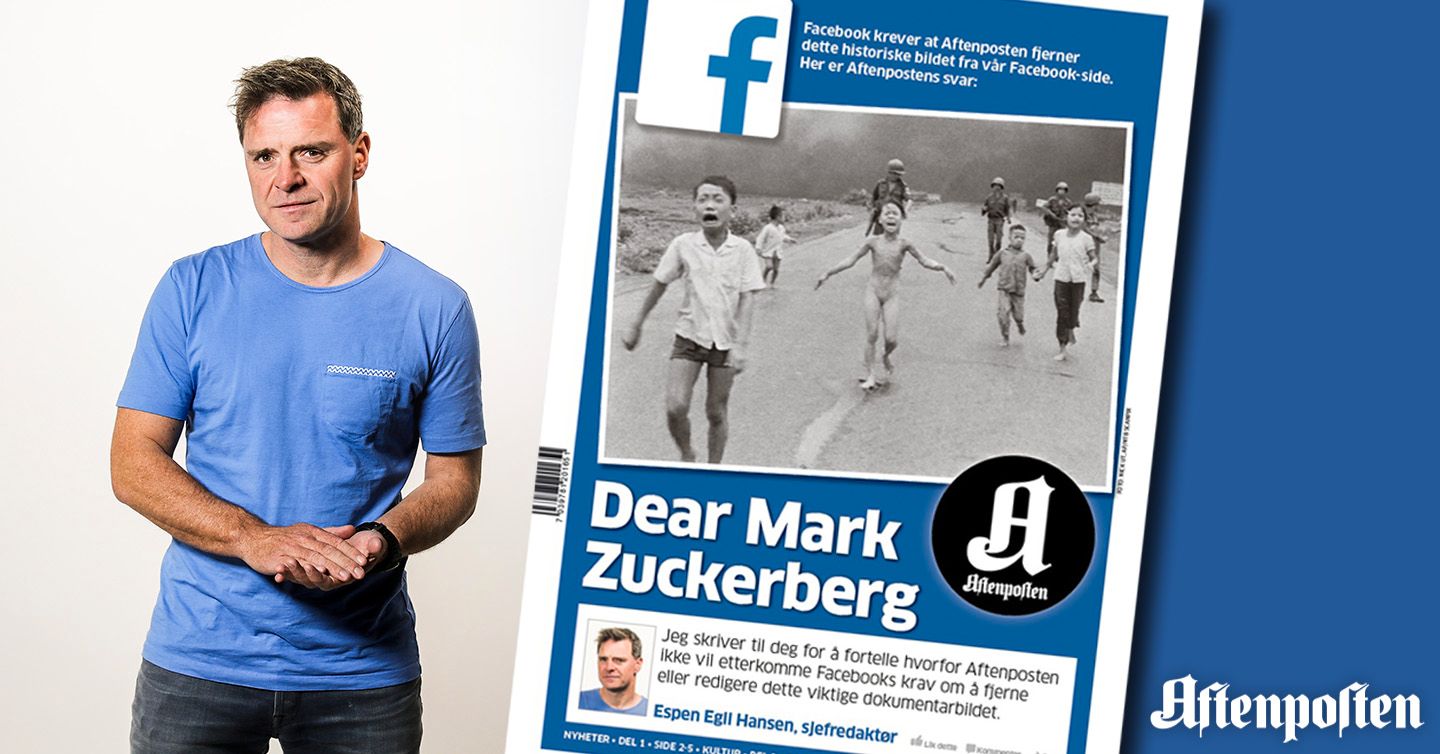
If there was an opening shot that was fired here, it may well be 2016’s open letter to Mark Zuckerberg from the editor-in-chief of the Norwegian newspaper AftenpostenEspen EgilHansen. In it, he responded to a demand from Facebook that the newspaper take down an iconic Vietnam war photograph by Nick Ut from its Facebook page.
“Dear Mark,” he wrote.
“You are the world’s most powerful editor … I think you are abusing your power, and I find it hard to believe that you have thought it through thoroughly.”
These shots have since continued to ring out from all corners. In early 2018 conservatives reacted angrily when Twitter froze or deleted thousands of accounts that it suspected of being bots, just weeks after the company had been accused of ‘shadow banning’ conservative accounts by downgrading certain tweets.
And social media companies have been accused of not censoring enough, as trolls use their platforms to target prominent female figures — including journalists — or incite hatred based on ethnicity and sexuality.
The cultural war affects journalism in particular because it is a fight to be heard, and a battle for relevance.
It is a battle that takes place within news organisations too: while some editors and producers struggle to maintain a system where news organisations still control both the news agenda and its distribution, many news consumers already live in a world where agendas are set — via algorithms — by a combination of friends, family, strangers and, yes, reporters; and where news does not begin and end at fixed times and spaces.
The cultural war is also a format war: the traditional inverted pyramid of newspaper storytelling has been overtaken by a proliferation of other shapes: engaging with a modern audience means engaging with new formats too, from the rise of visual journalism, live coverage and livestreaming, to gifs, emojis and memes.
Those who only speak in the language of the past risk losing the battle for the future.

Mobile journalism’s original promise

Of course amidst all this fighting it can be easy to forget about the original promise of social and mobile — the opportunity to bring a wider range of voices into journalism, and tell stories that would otherwise be left untold; to report from places and times that a traditional news crew could never reach; and engage audiences who would otherwise be disconnected from our reporting.


These promises remain as important as ever in 2018. And as the battles over money, power and culture come to a head, it is important to remember this: retreating to the old ways is not an option. We need to move forward. Mobile-First Journalism should prove a useful map to this exciting new territory.